iTorah: A Unique Educational Case From TRIARE
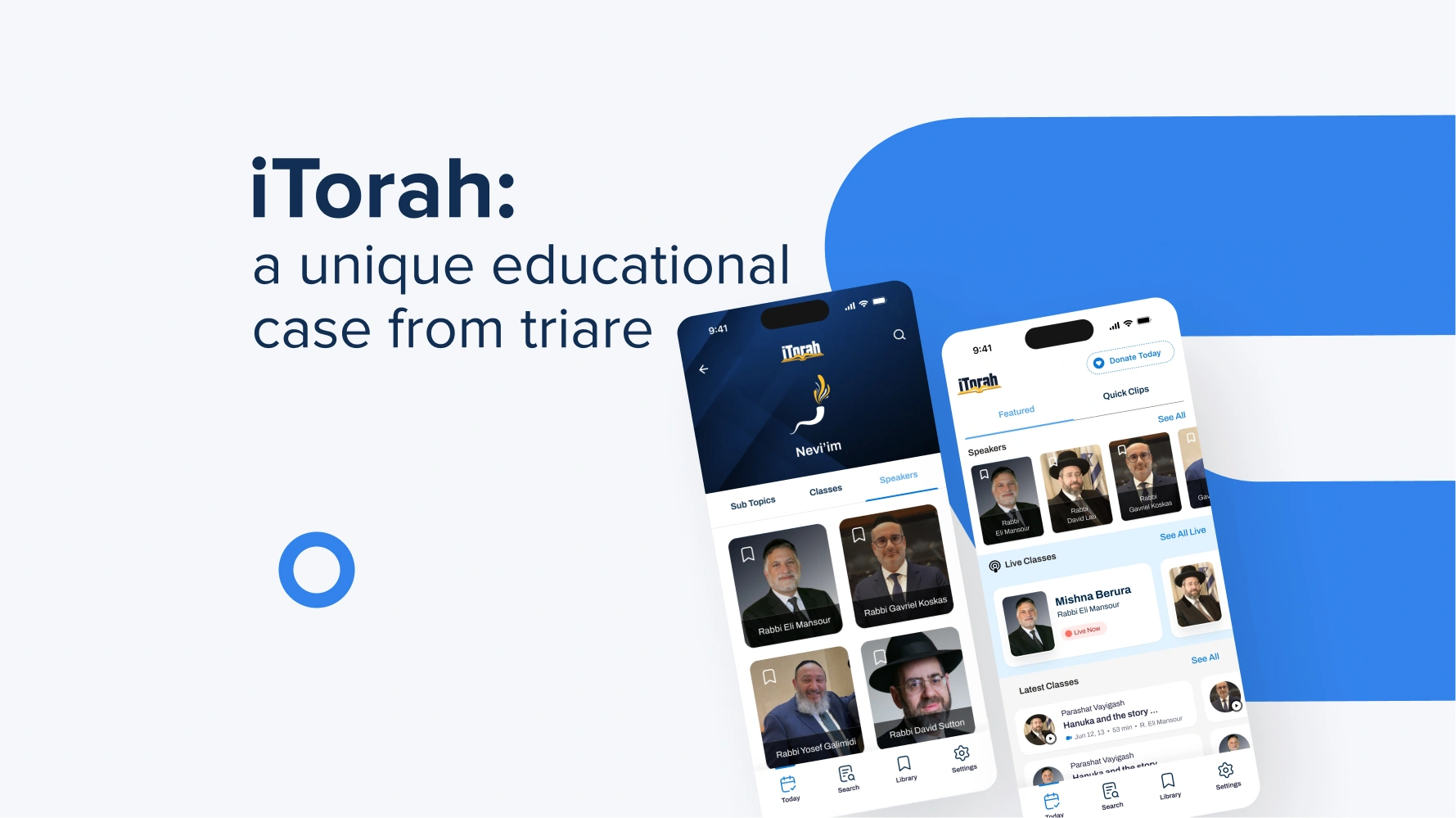
In this article, we take a closer look at the iTorah case study – an app built to meet the growing demand among those who are learning Torah. We’ll show how we combined a smooth mobile experience and strong product stability to create a solution that truly helps the Torah-learning community stay connected and grow together.
What is the iTorah app?
The iTorah application is a large-scale digital platform specializing in religious and educational content. The mobile application serves as a portal for students globally to access Torah lectures, Jewish books, and Judaica resources, with a focus on accessibility, creating a calm, easy environment for studying.
In essence, it’s an app that contains streaming content for learning Torah via video/audio lectures from rabbis. The main idea is helping people explore the Torah in a clear, structured way, using different learning formats. It combines the ancient wisdom from lecturers and modern ways in which people absorb new content today.
iTorah initially was developed and is managed by Torah Learning Resources Ltd. (TLR), a Brooklyn, NY-based non-profit organization, since late 2001. At first, the app creators started by sending out a short 3-minute audio recording of Rabbi Mansour’s daily recording of a Halacha. Soon after, they began transcribing and editing the audio files. This was followed in 2005. Then it grew to the website and mobile app, where everyone can learn all about iTorah and download materials from there.
Today, it serves mostly as a full-fledged mobile app, packed with convenient features and valuable materials. It’s designed for anyone who wants to get closer to the foundations of Judaism – understanding its teachings, following the commandments, and living an ethical life.
What does the iTorah app do?
First of all, the mobile app provides instant access to a vast library of media, including audio and video Shiurim (classes). You can start the learning journey from anywhere you want and move to other materials, exploring the sense of the Torah word.
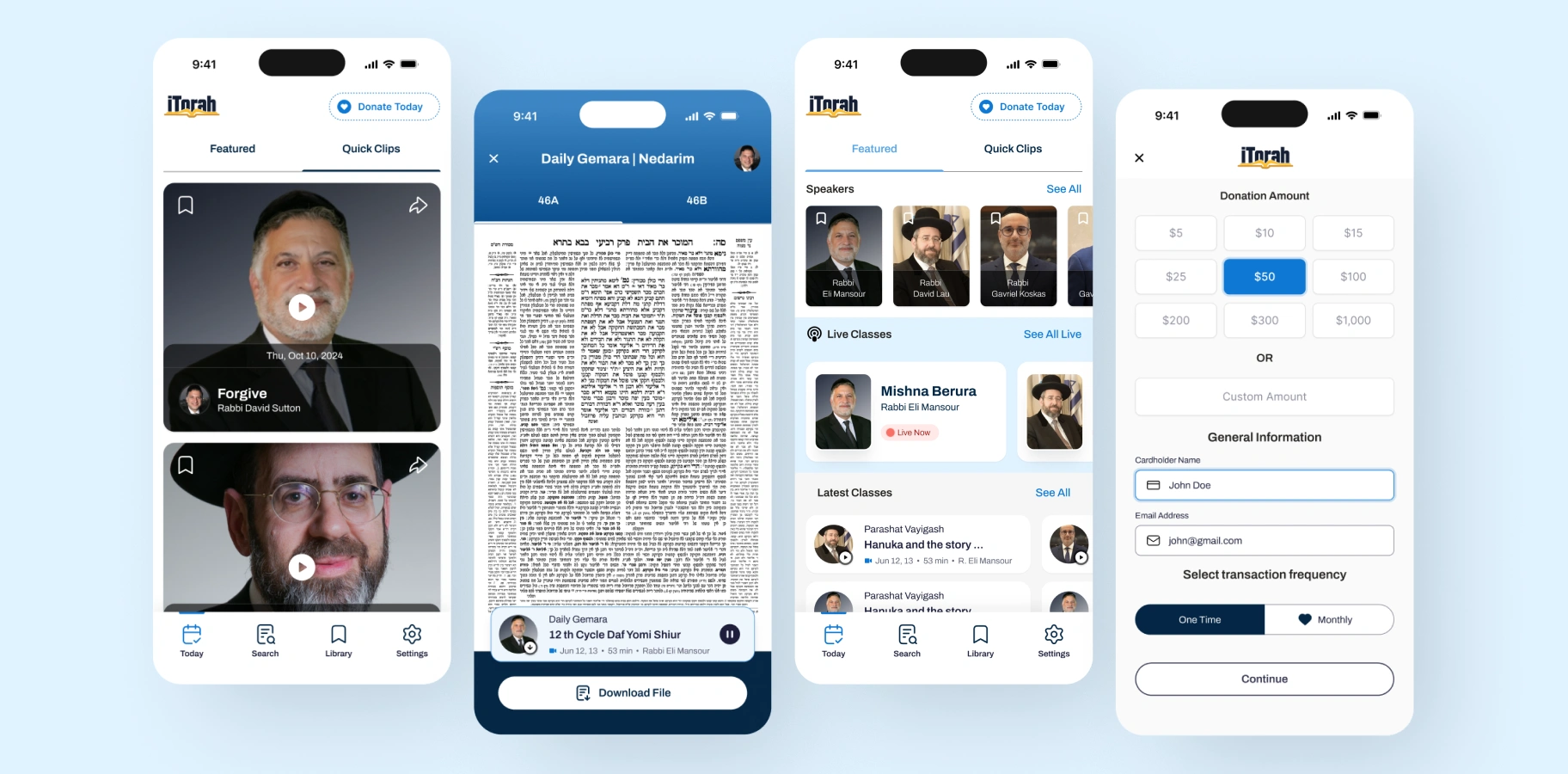
Within the iTorah app, you can browse “Recently uploaded classes,” view the “Top 20 popular classes,” and use a “Power search” to find specific religious content. The app also allows adding media files to playlists and queues and sharing them with friends on social media platforms.
Simply put, the app conveniently lets you explore, listen, save, download, and share the materials you need. It’s like carrying a personal handbook with you everywhere, filled with wisdom and teachings from respected rabbis.
What is the peculiarity of the iTorah application?
The iTorah app peculiarity is that it’s one of the largest centralized digital libraries with a unique collection of religious and educational content in mobile format.
The app covers a large collection of rabbis’ explanations, including series such as daily Halacha study, lessons on faith and ethics, as well as thousands of individual audio and video lessons. A single digital hub where all the popular content is already gathered for you.
Its main advantage lies in the scope and accessibility of the content. Lectures are available in video and audio formats, with search functionality, the ability to create playlists, and offline access. This effectively transforms iTorah into a “streaming platform for religious education.”
Such apps become more popular today with the evolving interest in contributing spiritual and educational content within mobile apps. People love the learning format the app offers – a digital one that works like Netflix or Spotify.
What technologies do we use to make the iTorah app?
The whole app was built on Flutter, the technology that is widely used for сreating cross-platform mobile apps. Thus, Android and iOS-based apps work in one ecosystem and look native for both operating systems. This approach is also often used to reach a bigger audience at once and build a larger community of people learning Torah.
TRIARE experts also integrated the Algolia search engine to power up the mobile app with a high-speed “Power search” functionality.
What was the iTorah development process like in TRIARE?
The whole process was kicked off with the research phase and design creation first. The design team creates mockups and prototypes with Figma to guide the development of the user interface.
On the mobile side, our Flutter team took over the legacy app, delivering new features and improving the codebase where possible. We also suggested a refactoring roadmap and, together with the client, built a backlog of improvements to enhance performance, quality, and user experience.
The development process was structured into several phases. The MVP phase was first, followed by 2 subsequent feature-rich phases, reflecting evolving client needs and technical requirements.
We also took over the website development – the web admin panel. To support the legacy .NET backend, we quickly got familiar with the existing architecture and ensured stable system maintenance. We also set up a smooth delivery process focused on regular updates, bug fixes, and performance improvements without disrupting the live product.
What features and unique functions did we create for the iTorah app?
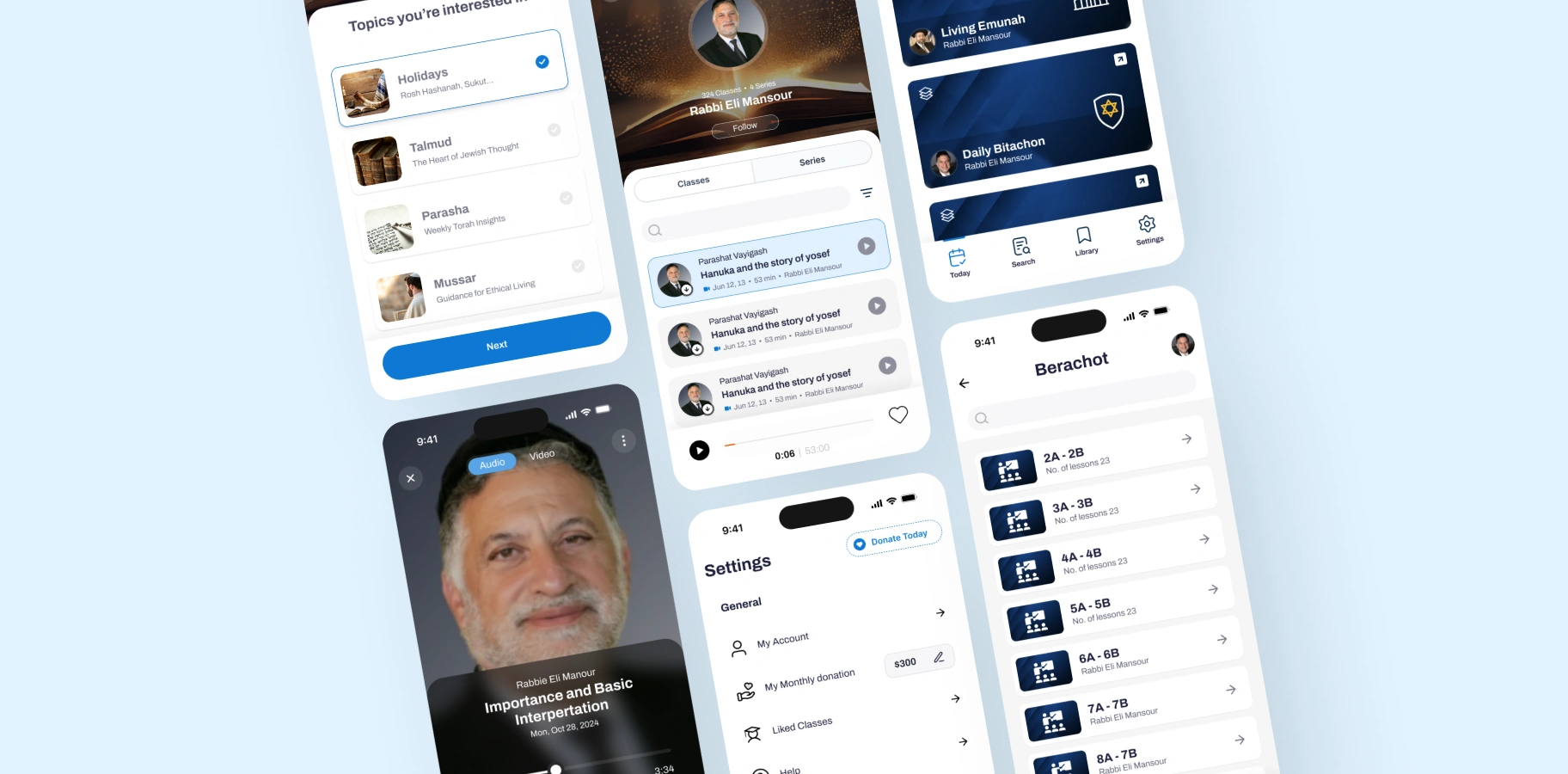
During the work on the iTorah app, we were precisely focused on its core goal – to provide simple access to learning materials and ways to engage with them. And from this, our development process covers the following features.
For the mobile app:
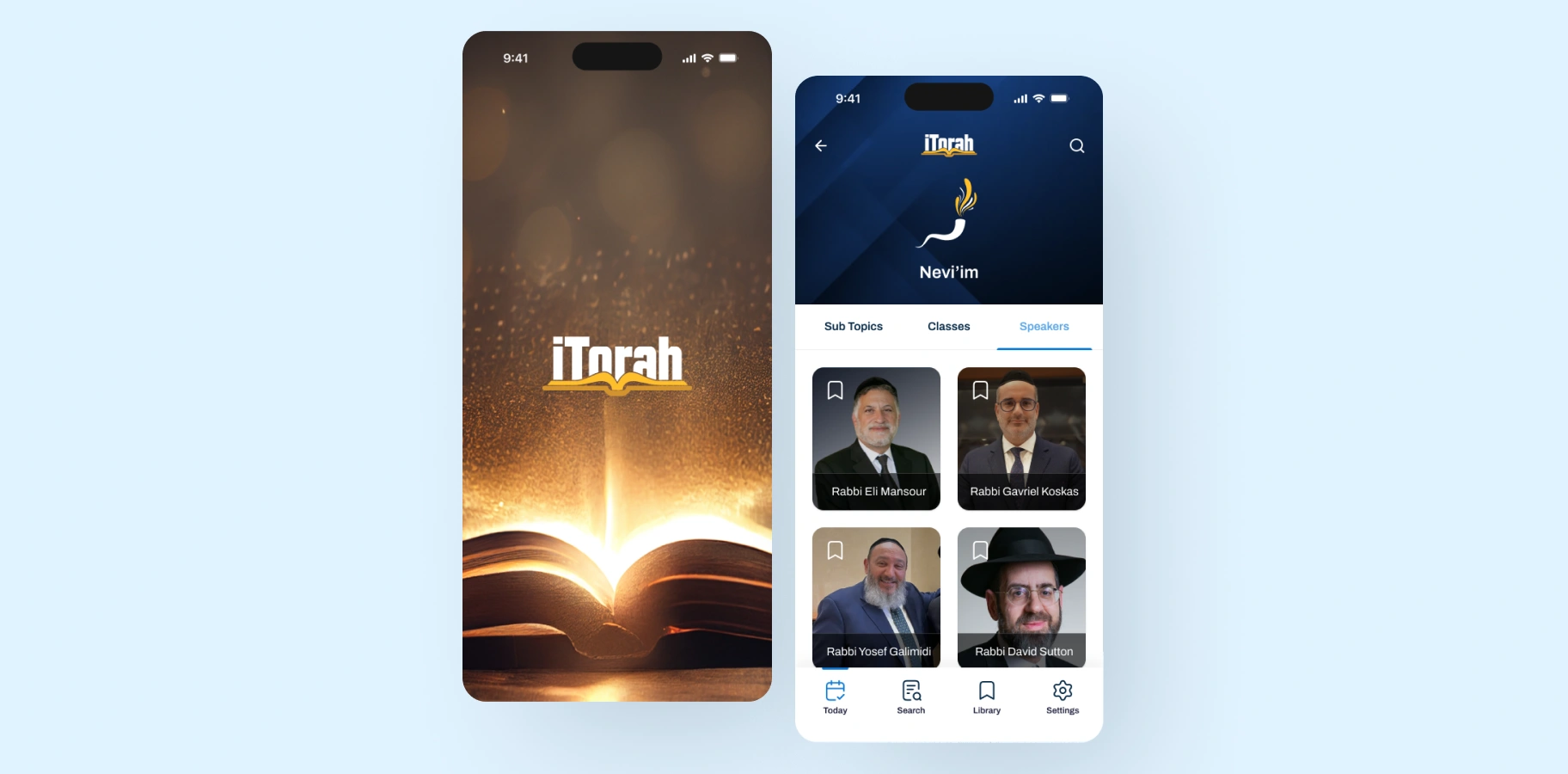
- Possibility to add users’ favorite rabbis to a personalized list for quick access to their latest lectures.
- A feature that lets users create a queue and playlists of their favourite media.
- Download/Upload handler to manage large media files efficiently on mobile data or Wi-Fi.
- Judaica Corner & Broadcasts has dedicated sections for specialized resources and live video broadcasts.
- Integrated analytics tracking to provide insights into user behavior and app performance.
On the backend side, we rebuilt and extended functionality in one of the legacy admin panels to match current needs. We also improved media loading speed, significantly boosting performance for end users, and refactored several key APIs critical to the web application’s functionality.
Convenient interface and user experience of the iTorah application
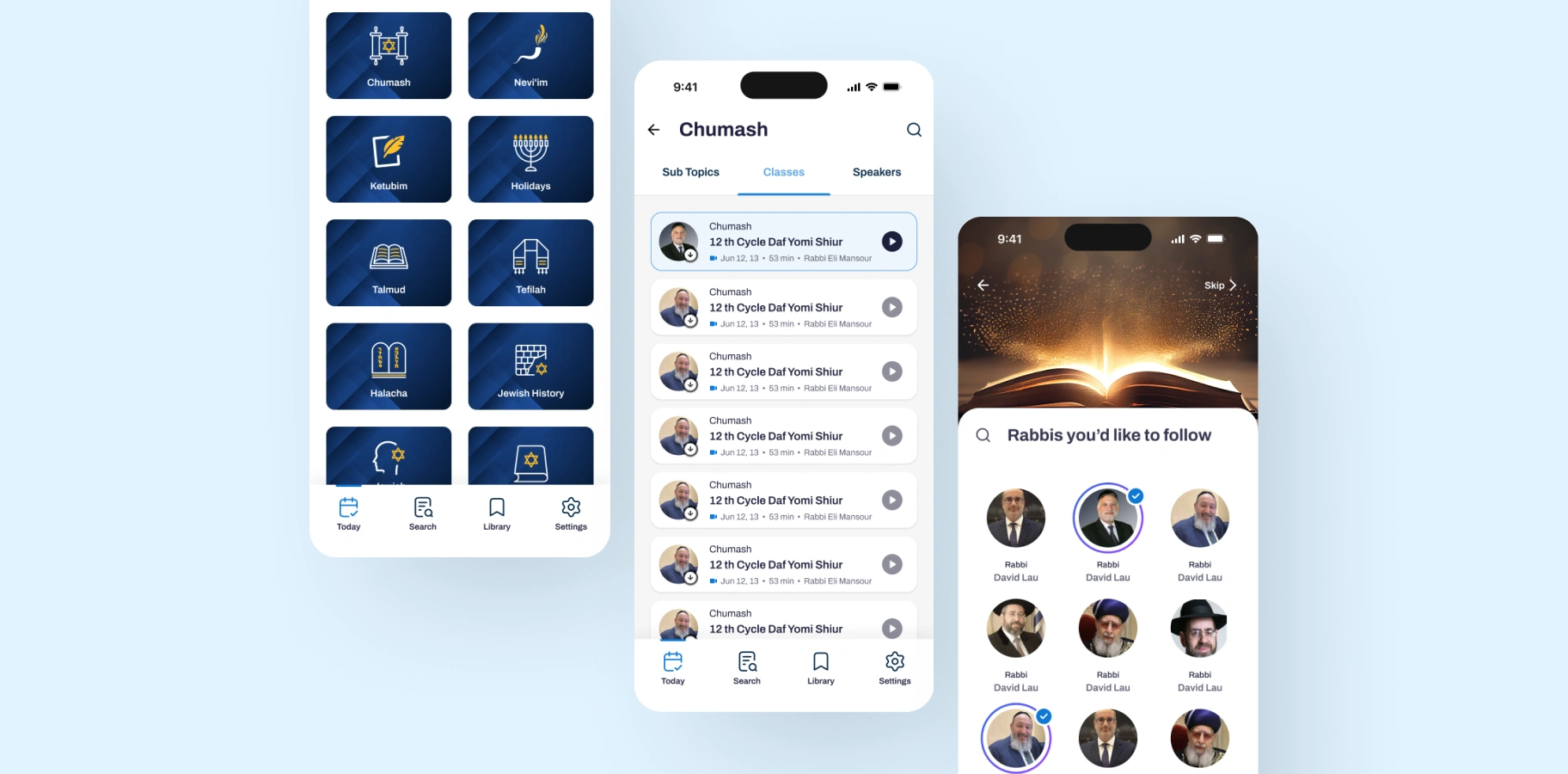
The design and development processes were based on user needs and what feels most convenient for them in the app. The mobile UI was designed with a focus on the zero-friction principle. From this point, key UX highlights include:
- Thumb-friendly navigation for easy access to core categories like Classes/Shiurim, Daily Halacha, and Hizuk.
- Instant search, using Algolia, we eliminated the typical loading delays associated with large religious databases.
- High scannability – a clean layout derived from Figma mockups that prioritizes content visibility over complex menus.
In short, we simplified all the complex app parts, put convenience as a priority, and created around them a user-friendly app design.
Launch and post-release support of the iTorah application from TRIARE
As for every other project we built, our team also supports the iTorah stable performance after launch and during its upgrades. It includes:
- Continuous monitoring backed by real-time health checks of the mobile API to prevent downtime.
- Quickly fixing any bugs that come up.
- Staging & production flow. Testing cycles where mobile updates are verified in a staging environment before being pushed to users.
- Optimizing performance (especially for media content).
- Updating features based on user behavior and adding new ones as needed.
During the launch stage, the TRIARE experts ran a final iTorah review of performance, stability, and key user flows. At the same time, they closely tracked metrics like outages, loading speed, and onboarding completion, since the first days after release are critical for keeping users engaged.
Conclusion
iTorah became a great example for our team of how tech can turn an educational idea into a product with real value. Built hand-in-hand with the client, the platform made access to knowledge simple and helped users make learning part of their everyday routine.
We didn’t just deliver features, we also set up a solid foundation for consistent growth, scalability, and long-term development.