What Is Agentic AI in Healthcare?
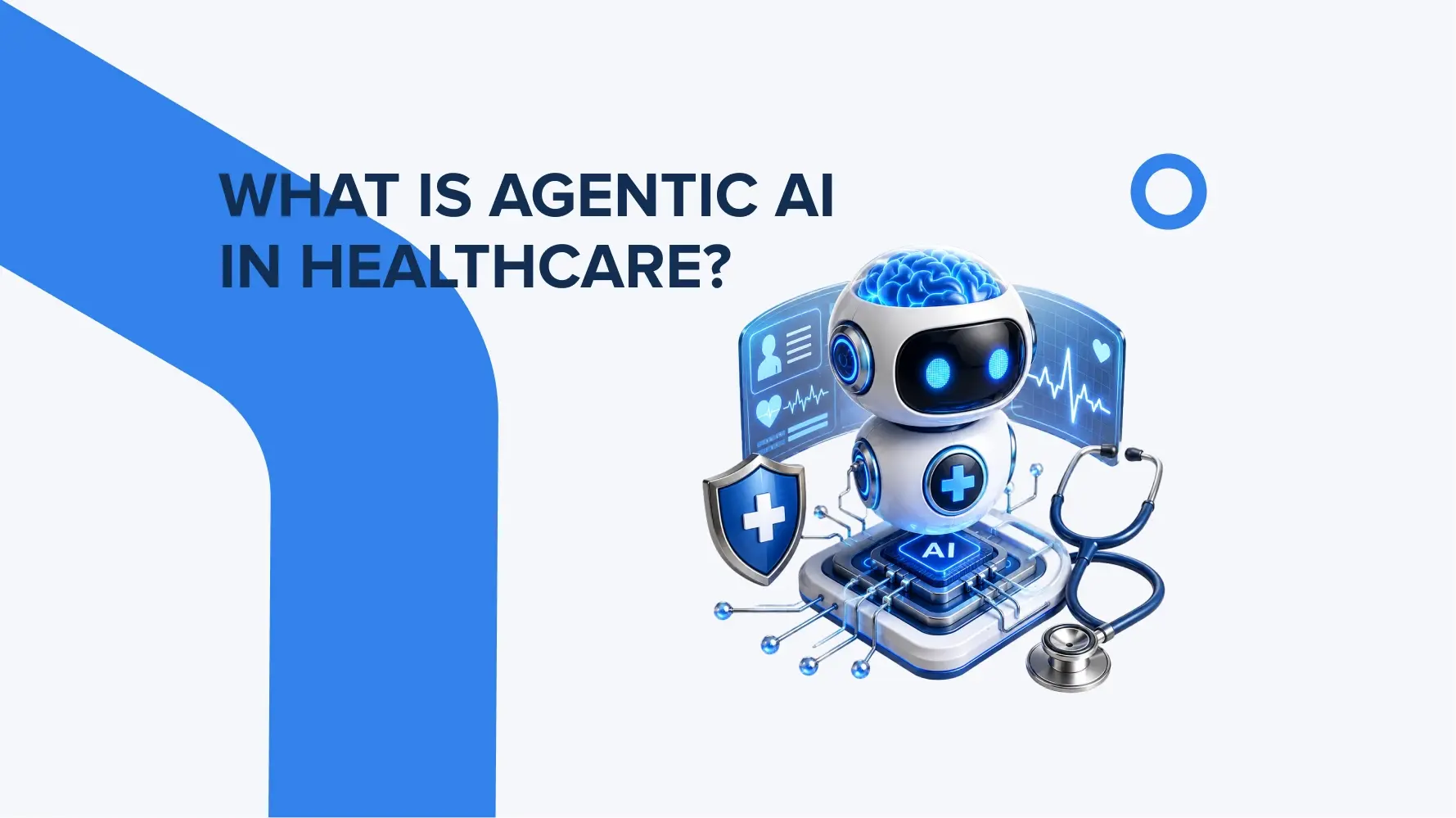
What is Agentic AI in Healthcare?
Agentic AI in healthcare is a smart technology that analyzes a huge volume of data, generates recommendations, and performs tasks independently to accomplish medical or administrative goals within the limits of specified rules and human supervision.
For example, it can collect data on patients, check test results, prescribe a treatment, schedule an appointment with a doctor, and update medical records. Under human control, of course.
Agentic AI on its own is a type of Artificial Intelligence that can independently plan, make decisions, and complete tasks to achieve a specific goal using available data, tools, and connected systems. It basically adds value to every industry, including Healthcare.
How is Agentic AI different from traditional healthcare AI?
Traditional AI in healthcare performs one specific action after a human request or once it gets the necessary data to proceed with the action. For instance, it can analyze an MRI image, predict the risk of disease, or generate text – short results and recommendations. Once the task is completed, the agent’s job is done. It doesn’t make changes in medical records or notify the patient that the results are ready. In other words – it has one task, and that’s all.
Agentic AI for healthcare instead performs complex processes independently based on rules that were set. Using multiple data sources and integrated systems, it determines the steps necessary to achieve the goal, reviews the results, and adjusts its actions as needed.
For example, an AI agent can retrieve data from the EHR, analyze lab results, determine whether additional tests are needed, schedule a patient appointment, update medical records, and notify the doctor. So, it performs separate tasks and updates the relevant systems, step-by-step, to keep data accurate and consistent across the healthcare ecosystem.
Where can Agentic AI be used in healthcare?
There are common use cases of AI agents for healthcare operations:
– Clinical decision support.
– Electronic health record (EHR) analysis.
– Patient care coordination.
– Administrative workflow automation.
– Appointment scheduling and optimization.
– Referral management for tests and specialist consultations.
– Real-time patient monitoring.
– Personalized treatment planning.
– Chronic disease management.
– Clinical trial support.
– Medical coding and billing automation.
– Hospital resource and bed management.
– Clinical trial patient recruitment.
– Clinical protocol compliance monitoring.
– AI-powered patient communication.
What benefits and risks should providers expect?
Benefits
– Reduced administrative workload for healthcare staff.
– Faster clinical decision-making.
– Better coordination across care teams.
– Fewer errors in routine workflows.
– More personalized patient care.
– More efficient use of healthcare resources.
– Improved patient experience.
– Compliance with HIPAA and other healthcare privacy regulations.
Risks
– Incorrect decisions caused by poor-quality or incomplete data.
– Privacy and security risks involving medical data.
– Integration issues with existing healthcare systems.
– Regulatory and compliance challenges.
– Overreliance on automation.
– The need for continuous human oversight.
Conclusion
Agentic AI in healthcare is a reliable tool that thinks two steps ahead and reduces staff manual work. By integrating it, you get an invisible assistant that takes control over all healthcare processes in minutes.