How to Develop Mobile Apps in 2026
How to develop a mobile application in 2026
Businesses that want to know how to develop mobile apps should start by identifying product goals, users’ needs, the functionality set and priorities, and a list of implementations that support app productivity.
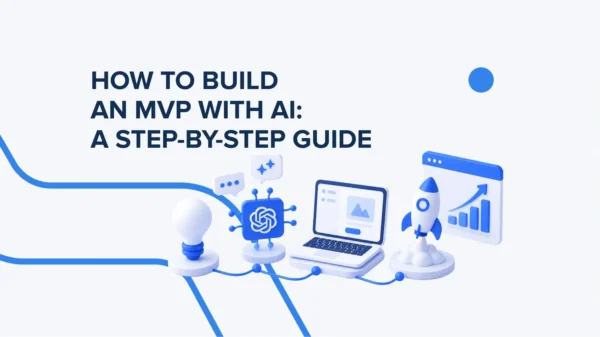
A modern approach focuses on creating an MVP first with core features that could be tested on real users for further improvements and additional work. This way, you can go to market faster with a product packed with only relevant features that bring value to everyone who will use it.
After launch, a new phase of work begins – regular app updates, analytics tracking, optimization for better productivity, and necessary improvements to meet market needs and beat the competition.
According to a Statista report, the global mobile app market will exceed $739 billion in 2026, underscoring the growing competition. That is what reinforces the value of a well-planned development strategy over rushing to launch.
What should you define before development starts?
Before custom mobile app development starts, capture the core factors that affect the final result’s success – individual business goals, target audience, key app scenarios, measurable results the app should bring. After this, define the budget you can put into the app (especially if you’re a startup and don’t want to break the bank from the start), development deadlines, KPIs, essential integrations (CRM, ERP, payment systems, APIs), and security and scalability requirements.
The more clearly these requirements are defined at the beginning, the more accurate the estimate and development plan will be.
What are the main stages of mobile app development?
There are core stages for mobile app custom development, based on a comprehensive approach that covers the entire app lifecycle.
Discovery Phase
Here, the team analyzes business goals, target audience, market trends, industry specifics (important for financial or healthcare areas), and defines the MVP structure.
UX/UI Design
Creating the visual app structure, user flows, and interface design.
Architecture Design
At this stage, experts select necessary technologies, databases, APIs, and integrations that reflect the app’s technical requirements.
Development
Building the frontend (interface), backend (server-side), and admin panel (if needed).
Testing
Verifying functionality, performance, security, and compatibility with various devices.
Launch
This stage covers preparing and publishing the app on the App Store and Google Play.
Support and development
The last development step, where the team releases updates, fixes bugs, adds new features, and analyzes user behavior.
How do teams choose the right tech stack?
The tech stack selection depends on the technical specifications and requirements you define for the final app. There is no one single solution for every app development; everything is tailored to specific business requirements.
In 2026, businesses more often go for cross-platform mobile development (React Native or Flutter). With them, you can build apps for iOS and Android with a unified codebase. However, if a project requires deep integration with the operating system’s capabilities or complex graphics, it makes more sense to use native development.
Besides the core tech stack for development, IT service providers define the tech tools for the backend, databases, cloud infrastructure, APIs, analytics, and security to deliver the product with excellent stability and growth potential.
What affects budget and timeline in 2026?
Core factors that affect budget and timelines in 2026 are feature complexity, platform numbers (iOS or Android only, or both of them), third-party integrations, design, and AI integrations. The more custom functionality a product requires, the higher the cost and the longer the development timeline will be. That’s why we advice precisely evaluate your requirements for the app from the very start.
There are also extra factors that affect the final cost – the initial requirements quality and the number of changes made during development.
There are two TRIARE cases that demonstrate how mobile products can reach the market quickly without sacrificing the core experience and overall quality. In just 10–12 weeks, TRIARE delivered an ESL Pals project – a cross-platform MVP featuring interactive lessons, progress tracking, gamification, push notifications, and seamless synchronization across devices, creating a solid foundation for future product growth.
iTorah is another example of rapid mobile app development, where the first release was completed in approximately 10 weeks. The MVP focused on essential user value by including a digital content library, smart search, bookmarks, personal accounts, and a responsive experience for both iOS and Android, allowing the product to launch early and evolve through subsequent iterations.
What should happen after launch?
After launch, the team continues their work with the app. Very important to track its productivity, analyse users’ behaviour, and performance to make necessary improvements, fixes, and updates based on this data.
It’s important to monitor key KPIs (user retention, conversion, engagement, and stability), maintain compatibility with new versions of iOS and Android, and gradually expand functionality. As a result, the app stays competitive and is able to grow over time.
Conclusion
In 2026, to develop a B2B mobile app, businesses should look beyond technical implementation. A well-planned development process, covering everything from strategy and design to launch and ongoing improvements, helps create scalable products that continue to support business growth.