Web Development Trends In 2024: AI, ML, PWA and more

Learn what web development trends are set to define the digital world in 2024.
Intro. Review of current features at the beginning of 2024
Web development trends change and transform regularly. Any business and development company must stay updated with the latest changes to keep up with the times. In 2024, the specialists will experience new advances that will shape the future of web software. Knowledge of trends will allow the developers to create innovative, modern, effective websites and digital tools that meet the expectations of users. The developers should stay competitive by focusing on trends ranging from progressive apps, AI optimization, and voice search to accessibility and cybersecurity.
In 2024, the main web development trends will focus on the following features:
- Artificial Intelligence
- Machine Learning Development
- Internet of Behavior
- Progressive Web Apps
- GraphQL
- Zero Trust Architecture
According to Gartner, regenerative AI will drastically change 70% of the design and development work for new mobile and web applications by 2026. Each trend helps businesses create the proper solutions for the specific stakeholders and save current and future investments by increasing the value of clients’ ever-changing needs.

What should a web and app development business be prepared for?
With the help of modern trends in web development, it is possible to use the best practices, methods, and technologies that determine how to introduce and optimize software, website design, and other digital products.
In 2024, crucial aspects involve the following features:
Adaptive design. It guarantees that websites will easily begin to adapt to the screen parameters of any device.
Accessibility and functionality. With the growing popularity of technology and the use of smartphones, people need easy access to platforms and products from developers while maintaining functionality.
Modern frameworks and libraries have gained popularity due to the ability to optimize various processes and increase the productivity of the digital product. They allow developers to use many tools and a structure for creating interactive software. Optimizing speed and performance is an equally important trend and aspect. The studies confirm that users are not ready to wait for a page to load, by leaving the website. Optimization is key in this case.
AI Remains at the Forefront of Tech Innovation
New trends in web technologies are based on an effective introduction of AI and ML. AI represents advanced technologies that enable software to simulate intelligent behavior, improving performance over time. AI focuses on developing tools that help imitate human actions and minds by performing complex tasks. ML is an algorithm that allows machines to learn from data, do analytics and other actions without explicit programming.
Both technologies are complemented by a large number of software in different fields of activity. ML algorithms can identify patterns based on which predictions occur.
The best AI solutions for web development in 2024 include:
Managed Detection and Response. It represents cybersecurity with continuous monitoring and threat detection, response, and remediation of web security. In addition, complete analytics emerge. It allows the specialists to understand the nature of the origin of vulnerabilities.
Cloud detection. It analyzes traffic and data through the best algorithms and ML models. The implementation of the development will allow the developers to quickly find threats without reducing the performance of websites, additional equipment, and software.
Each of the tools has a set of specific tasks and solutions. An excellent option includes creating software based on AI and ML.

Internet of Behavior (IoB). Why is this already a reality, and what awaits in 2024?
The process of gathering and examining data about human behavior is called the “Internet of Behavior”. Internet of Things (IoT), edge analytics, and behavioral sciences are the three research fields combined into IoB. These platforms collect information from wearable devices, smartphones, home appliances, and security cameras. After analyzing the data, developers receive a report on the patterns of user actions.
IoB aims to help developers understand and monetize the volumes of data generated by network nodes in the IoT.
The latest trends in web development emphasize the following advantages of IoB:
Improved customer interaction. IoB technology helps increase customer loyalty and satisfaction.
Personalized marketing. By understanding consumer behavior patterns, entrepreneurs can design successful marketing campaigns.
Increased security. IoB devices monitor driver behavior and warn of potentially dangerous situations.
To successfully integrate IoB, companies must ensure the confidentiality of the collected data. Nowadays, customer information may still be completely or partially lost.

Headless CMS Goes Mainstream
Headless CMS is a server-based content management system that works primarily as storage. It makes content available via an API for display on any device without a built-in interface or presentation layer. Compared to a standard CMS, this technology works with different frontend types through the cloud or the client’s system. Such a CMS interacts with any interface and device, ensuring synchronized data exchange between web resources.
This innovative technology involves the following advantages:
Variety of content channels. This type of CMS can be connected to any number of frontends since the data passes through one API and displays content on any device, website, or mobile application.
Work consistency. With a headless CMS, the developers do not need multiple commands for each content. They can optimize resources as much as possible and save on the work of specialists.
Micro Frontends Expand on Modularity
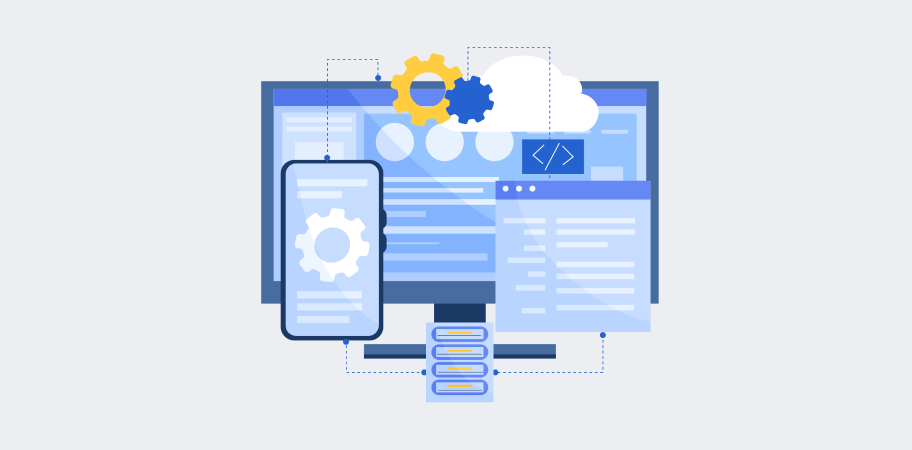
Micro frontends is an approach to web application development based on microservices. Instead of the traditional monolithic approach, where the entire front end of the application is located in one large code base, this approach proposes dividing the web interface into smaller and autonomous components.
Such new web technologies as micro frontends show the following advantages:
Separation by functionality. Each component is an independent module with specific functionality that can be developed and deployed separately. This method allows teams to develop and maintain each module independently of each other.
Technology independence. Depending on specific requirements, the developers can use different technologies, libraries, and frameworks. There is no need to be tied to one common technology stack, by choosing the best tools for each module.
Self-sufficient. They can be deployed, scaled, and maintained independently of each other. Each component is a complete and self-contained web interface, making it easier to manage the project and distribute responsibilities to the development team.
Flexibility and Scalability. It provides high flexibility and scalability, allowing the specialists to develop and deploy new functionality and changes without affecting the rest of the system.
Micro frontends is an approach that changes the landscape of web application development. It allows the professionals to make the application more flexible, scalable, and efficient by distributing tasks among independent development teams.
Confidentiality. The risk of data leakage with a headless CMS is minimal since the content is worked without being tied to the interface. The CMS is connected via a CDN network, resistant to overloads and hacker attacks.
High download speed. Since the transfer occurs via the API, static content will be instantly displayed on a large service and a one-page landing page.
Saving resources. Thanks to the connection to the CDN, there is no need to conduct load testing and involve specialists to configure server balancing.
Hidden backend. With this type of CMS, it is not easy to understand what type of CMS is being used to protect the system.
A headless CMS provides information to content managers who host and edit it. Most systems are ready-made software with APIs stored on a server or in the cloud. Headless CMS allows the developers to customize the client’s content by editing the interface and benefiting from a zero-touch, real-time scalable backend.
Widespread Adoption of GraphQL
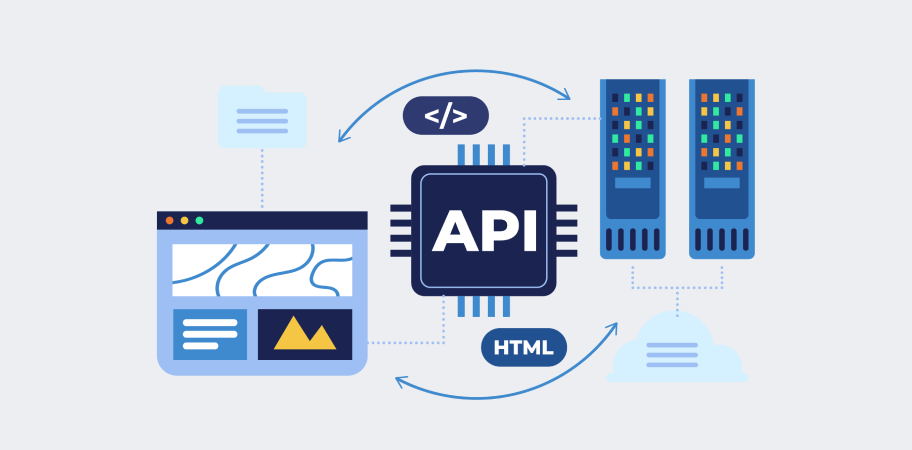
GraphQL is a query and data manipulation language for APIs and a framework for executing those queries. The center of any GraphQL API implementation involves a data schema describing what types of data it can work with and what information it can return in response to a request.
GraphQL APIs allow clients to specify the exact data they need by sending a single subquery to the server. The system responds with a JSON payload that includes only the requested data. When using GraphQL, clients can determine the structure of the response by creating a query that matches the shape of the data.
The field of back-end web development in the form of the GraphQL APIs demonstrates the following benefits:
- It allows clients to fetch multiple resources in a single request. Clients can specify relations between resources in their request, and the server will return all the requested data in a single response. This feature reduces the number of hits to the server, improving performance and reducing network load.
- It eliminates the problem of overfishing data often found in other APIs. GraphQL solves this issue by allowing clients to receive only the needed data, reducing network latency and improving performance.
- It provides powerful tools for exploring and understanding API design through introspection. Developers can easily query the API for information about available types, fields, and relationships. This feature makes it easier for developers to understand the data model and create efficient requests.
A well-documented API with clear and concise documentation, code examples, and tutorials can significantly reduce the learning curve for developers. Comprehensive support, such as developer forums and dedicated support channels, can improve the developer experience.

What is PWA? What do you need to be prepared for in 2024?
In 2024, the use of multi-touch, multi-screen, and multi-functional interfaces will gain popularity. This trend is considered new in the world of web development. PWA is an innovative technology in web development. It allows the developers to launch a web page so that it feels like an application while maintaining its visual component and functionality.
PWA development can work on completely different platforms and operating systems. In this case, the productive features of PWA involve the following advantages:
Low development costs. The developers will not need to introduce separate apps for Android and iOS as they are quite expensive. Creating a PWA for a ready-made website will be much faster than developing a native application. However, developing a website with PWA from scratch may take longer, depending on individual requirements and the project’s complexity.
Cross-platform. PWA does not need separate development, testing, and adaptation for each system. With a PWA, the specialists can use familiar performance techniques that work in a regular browser.
Memory saving. Such web applications will take up much less space on users’ smartphones. An example shows Pinterest which has reduced its memory footprint using PWA to 150 kb.
Fast installation speed. PWA is installed on the device in a couple of clicks. Unlike ordinary applications, the users will have to wait to download and install them on the device, even with a high Internet connection speed.
The developers use PWA-based applications more often than it seems at first glance. Brands such as Twitter, Tinder, Uber, Telegram, Starbucks, Forbes, AliExpress, and Aviasales enjoy PWA-based applications as a basis or in addition to a mobile application.
New horizons for mobile optimization
The key web trend shows that software should not only work and look efficient but also provide value to people on any device. This result can be achieved by the following means:
Progressive Web Application (PWA). With this tool, web pages will display their mobile interface and support native interactions. Implementing this approach provides a great experience for users who will not even realize they are working in a browser.
Accelerated Mobile Pages (AMP). They provide fast loading but work only with static data, showing the most important information.
Multi-Experiment Development Platforms (MXDP). A ready-made software solution includes a specific number of tools for quickly creating a project and avoiding high costs and other resources.
WebAssembly. This bytecode can be used to create productive software in browsers or increase the speed and interactivity of applications. Code execution is faster compared to JavaScript.
Every app in 2024 needs to be effective on all devices and displays. It is important that it can connect to sensors to enable IoT capabilities. The trend of a feature-rich website allows specialists to beat the competition by providing the client with an excellent user experience.

The Advent of Zero Trust Architecture (ZTA). What is this, and can it become a reality?
Zero Trust Architecture is an evolving concept without certification or practical standards. Most of the companies rely on ISO certifications. It represents an architectural approach that assumes that any transaction, entity, or identity is only trusted once it has proven its status. Its purpose is to ensure network security. The Zero Trust approach is the opposite of the conventional wisdom that the network remains secure as long as security systems do not detect compromise.
The web development trends provide an opportunity to reveal the following features of ZTA:
- All data and services are considered resources. A modern network can consist of many devices and services of different classes. Services such as SaaS, cloud services, and personal devices that access enterprise resources can also be classified as ZTA resources.
- Access to individual resources is provided for one session only. Trust must be confirmed before access is granted. Privileges are assigned as low as possible.
- Access is determined by dynamic policy. A policy is an organization’s set of access rules to a user, resource, or application.
A zero-trust approach requires that resources, users, and assets be valued individually, regardless of where they are located or who owns them. Authentication is performed individually for any corporate resource.
Conclusion
The demand and popularity for web development in 2024 will remain behind the user experience. The interface should be unified for any device, making the product vital for business among consumers. Implementing metaverse solutions and chatbots with AI will improve the performance even more. Current development trends can become the standard for the future of web software. Their implementation will help close the issue of competitiveness, increase the customer base, reduce costs, increase monetization channels, and open the way to new opportunities.