AI Agent vs AI Automation: What Does Your Business Actually Need?
What is the difference between an AI agent and AI-based automation?
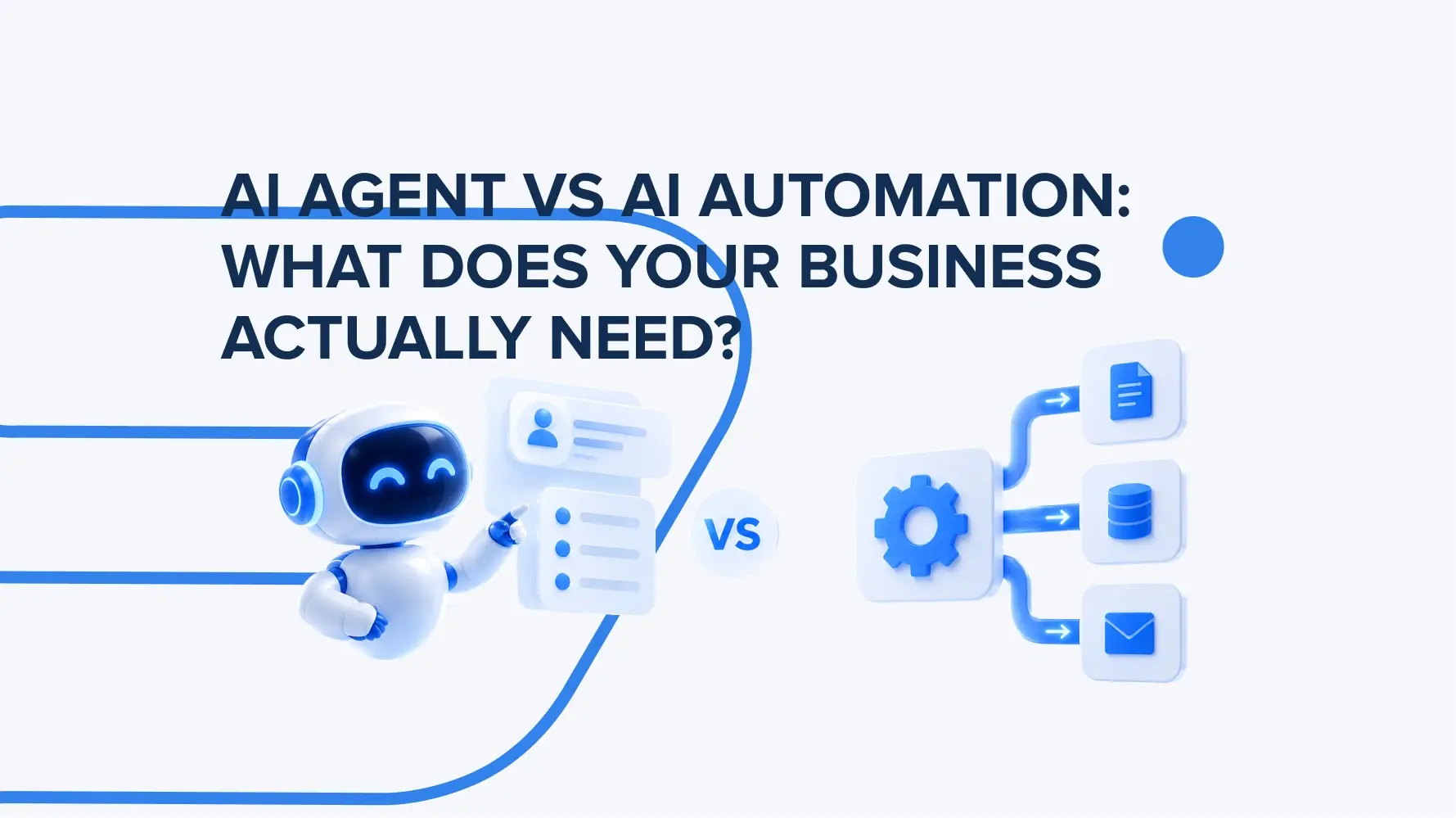
Сomparing AI agent vs AI automation, the automation handles all the repetitive tasks following prescribed rules and scenarios. AI agent, instead, works toward a goal – plans steps independently, selects tools, makes decisions, and handles exceptions within defined limits.
The main thing that differentiates an AI agent from AI automation is their autonomy. AI automation can use AI for document recognition, but the sequence of actions is defined by the developer. The agent adjusts this sequence based on the results obtained, while remaining under the control of the business.
When does a business need AI-based automation?
AI-based automation makes sense when a business’ internal workflows include lots of repetitive tasks with a clear sequence and only a few exceptions. For example, AI workflow automation helps extract data from invoices, route requests, and synchronize records between systems. The specific tasks you set individually for your business.
All you need to do in this process is review data quality, rule consistency, and the required controls and compliance measures.
When does a business need an AI agent?
A business needs an agentic AI when the desired outcome is clear, but the process varies by case and can’t be fully captured with predefined rules. AI agents for business work better in cases when handling complex inquiries, qualifying leads through follow-up questions, and researching information across multiple sources are needed.
How do costs and maintenance compare?
For predictable tasks, AI automation is much more affordable in integration and support. AI Agents, on the other hand, require additional expenses for model calls, decision verification, and monitoring. It can make mistakes, so access restrictions and human involvement in approving risky actions are necessary. Automation handles non-standard situations less effectively, requires rule updates, and necessitates verification of AI results.
Can AI agents and automation be combined in one workflow?
Sure, AI automation and AI Agents work together well. They complement each other within one process – the automation script performs routine operations, while the agent handles exceptions that require analysis.
For example, in business process automation, the system recognizes an invoice, verifies the details, and forwards it for approval. If there are any mismatches, an AI agent reviews the documents and prepares an explanation for the accountant. All actions are logged for tracking.
How does TRIARE help integrate each solution into your business?
To integrate each solution into your business, TRIARE experts start with a deep discovery phase. We analyze core internal processes, business objectives, and technical requirements to determine where automation, an agent, or a combination of both is needed. The collected materials serve as a base for further decisions in AI development and integrations.
Then, we step into the data analysis stage, where we develop solutions, integrate them with existing systems, and conduct QA. We test typical scenarios, exceptions, and access restrictions. After launch, we provide full product support and refine the solution based on changes in processes and the results of its use.
For example, for logistics company Sephyre, we connected the CRM with delivery services and automated document and invoice preparation, cutting order processing time to about 1 minute.
Conclusion
Before investing in custom AI agent development, define the main business problem clearly first. Then, agree on what success looks like, and test the approach on real tasks. That gives you a much stronger basis for deciding whether to scale it and where the budget will bring the most value.
If you’re exploring AI for a specific business process, book a discovery consultation with TRIARE specialists. We’ll help you assess the use case and identify the most practical way to improve it.