How to Use Machine Learning to Enhance UX/UI Design


User experience (UX) and user interface (UI) design are crucial for attracting and retaining audiences. The integration of machine learning marks a transformative leap forward, allowing businesses to reshape user interactions with their products. This article explores how machine learning enhances UX/UI design, optimizing usability and user engagement.
A few words about machine learning and how it relates to UX/UI design
Machine Learning (ML) is revolutionizing UX/UI design, adding a smart edge to how we create digital experiences. Instead of manually coding every single action, ML lets systems learn from data and make their own decisions. This means they keep getting better and more accurate over time, enhancing user experiences naturally.
Think of ML as a way to pull knowledge from data. By training algorithms on datasets, they learn patterns and relationships. Once trained, these algorithms can predict outcomes and make decisions when new data comes in. There are different types of ML, like supervised learning, unsupervised learning, and reinforcement learning, each with its own set of tricks and applications.
How can machine learning improve UX/UI design in digital products?
By leveraging ML, designers can create digital products that are visually appealing and highly functional, ultimately leading to better user satisfaction and engagement. Here’s how:
Personalization. ML algorithms analyze user behavior and preferences to deliver tailored content and recommendations. This means users see what they’re most interested in, leading to more engaging and satisfying experiences.
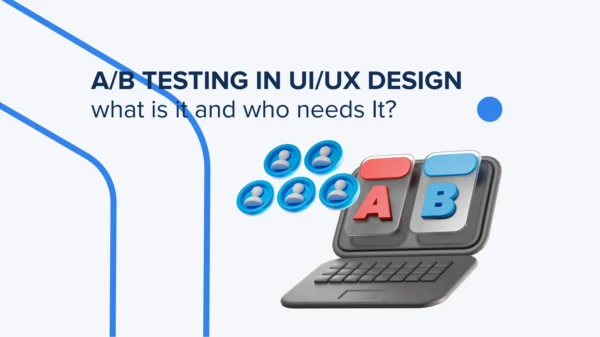
Automated testing. ML can automate the process of A/B testing different design elements, quickly determining which variations perform best. This speeds up the optimization process and helps in making data-driven design decisions.
User segmentation. ML can segment users based on their behavior and preferences, allowing designers to create targeted designs for different user groups. This ensures that the product caters to a diverse audience effectively.
Enhanced usability: By analyzing user interactions, ML can identify pain points and areas of friction within the interface. Designers can then address these issues to improve overall usability.
Voice/Image recognition. Integrating ML with voice and image recognition technologies can create more interactive and accessible interfaces. For instance, voice commands and visual searches can enhance user interaction, especially for those with disabilities.
How do design teams integrate machine learning into UX/UI design?
By following these strategic steps, design teams can effectively integrate machine learning into UX/UI design, creating more personalized, intuitive, and adaptive user experiences:
Identifying use cases. Design teams identify specific use cases where ML can add value. This might include personalized content recommendations, predictive text, or dynamic interface adjustments based on user behavior. Clearly defining these use cases ensures that ML is applied effectively to solve real user problems.
Prototyping and testing. Once the ML models are developed, they are integrated into prototypes. These prototypes are tested with real users to gather feedback and assess the effectiveness of the ML-driven features. Iterative testing helps refine both the models and the design elements they influence.
Automation. ML can automate repetitive design tasks, such as A/B testing and user segmentation. This allows design teams to focus on more creative aspects of the design process while ensuring that data-driven decisions are continuously optimized.

Which industries derive the most benefit from integrating machine learning into UX/UI?
While the principles of integrating ML into UX/UI are somewhat universal, the specific niches where it can be applied include:
E-commerce. Personalizing product recommendations based on user behavior and preferences, improving search relevancy, and optimizing pricing strategies using predictive analytics.
Healthcare. Enhancing user interfaces of medical devices and apps with ML-driven features like real-time patient monitoring, diagnostic assistance, and personalized treatment recommendations.
Finance. Implementing ML for fraud detection, risk assessment, and personalized financial advice, improving user trust and security in financial applications.
Entertainment: Recommending content based on user preferences in streaming platforms, predicting user reactions to optimize content delivery, and enhancing gaming experiences through adaptive gameplay.
Hospitality. Offering personalized travel recommendations, optimizing booking processes, and enhancing customer service through chatbots powered by natural language processing (NLP).
Education. Personalizing learning experiences through adaptive learning platforms that adjust content and pace based on individual student performance and learning styles.
Automotive. Designing intuitive interfaces for smart vehicles that adapt to driver behavior, provide predictive maintenance alerts, and integrate with other IoT devices for a seamless user experience.

What challenges do businesses face when integrating machine learning into UX/UI design?
Companies encounter several key limitations when integrating ML into UX/UI design:
Data quantity. ML models require large volumes of high-quality data to train effectively. Ensuring data cleanliness, relevance, and diversity can be challenging, especially in complex UX/UI environments where user behavior may vary widely.
Algorithm complexity. Developing and fine-tuning ML algorithms requires specialized expertise. Businesses may face difficulties in selecting the right algorithms, optimizing parameters, and interpreting results accurately.
Cost. Developing and deploying ML solutions can be resource-intensive, requiring investment in technology, talent, and infrastructure. Small businesses or startups may face challenges in allocating sufficient resources for ML integration.

What are the key business benefits of integrating machine learning into UX/UI design?
Incorporating ML into UX/UI design provides numerous significant advantages for businesses:
Data-driven decision-making. ML-driven insights enable us to make informed decisions in design strategies, leading to more effective and impactful user interfaces.
Operational efficiency. Automation of tasks like testing and user segmentation frees up resources for innovation and strategic improvements in design processes.
Enhanced engagement. By predicting user needs and behaviors, ML helps keep users engaged with dynamic and relevant content and features.
Competitive edge. Delivering superior user experiences through ML-driven enhancements positions us ahead of competitors, fostering long-term customer relationships and growth.

What are the future trends in machine learning and UX/UI design?
While machine learning in UX/UI design continues to evolve, several trends are gaining momentum and becoming favorites among users:
Explainable AI (XAI). As AI systems evolve and become more intricate, there is an increasing demand for transparency and explainability in how these systems make decisions. Explainable AI (XAI) aims to make AI models understandable to humans, especially in critical applications like healthcare, finance, and law. F
For instance, in healthcare, XAI can explain why a particular diagnosis or treatment recommendation was made, helping doctors trust AI-driven decisions and potentially improving patient outcomes.
AutoML. AutoML tools automate the process of building machine learning models, making it accessible to individuals without extensive data science expertise. This democratization of machine learning enables businesses and researchers to harness the power of AI more effectively.
For instance, platforms like Google’s AutoML and Microsoft’s Azure AutoML allow users to create custom models for various tasks like image recognition or predictive analytics without deep technical knowledge.
Federated Learning. It enables training of machine learning models on decentralized devices (such as smartphones or IoT devices) without centrally storing sensitive data. This approach preserves user privacy while still improving model accuracy over time.
Again, taking healthcare as an example, federated learning can be used to collaboratively train a model across multiple hospitals’ datasets without sharing patient data, thus maintaining confidentiality while advancing medical research

What are some real-world examples of machine learning-enhanced UX/UI?
Here are some of the most prominent brands that have integrated machine learning into their design strategies:
- Netflix
Netflix uses machine learning algorithms to personalize recommendations for its users based on their viewing history, ratings, and preferences. This enhances user engagement by suggesting content that is likely to be of interest, improving the overall user experience.
- Google Maps
Google Maps utilizes machine learning to predict and suggest routes based on real-time traffic data, historical traffic patterns, and user preferences. This helps users navigate more efficiently by offering alternative routes and estimated travel times.
- Amazon
Amazon employs machine learning algorithms to personalize the user experience by recommending products based on browsing history, purchase behavior, and demographic data. This enhances the shopping experience by presenting relevant items and improving conversion rates.
Pinterest utilizes machine learning to enhance its visual search capabilities. It can identify objects within images, recommend related content, and personalize user feeds based on their interests and interactions. This improves user engagement by delivering more relevant and inspiring content.
Conclusion
As machine learning continues to revolutionize UX/UI design, TRIARE stands ready to empower businesses across diverse industries. Whether enhancing existing interfaces or crafting entirely new user experiences, our expertise ensures solutions that optimize usability and drive deeper satisfaction.
Partner with TRIARE, a software development company from Ukraine, and discover how we can tailor innovative solutions to meet your unique needs!